Key takeaways
- Yearly and irregular bills are predictable, so they belong in the monthly plan, not in the emergency fund.
- Divide each cost by the months until it's due and set that amount aside every month like a bill.
- The first year costs more because you're catching up, so fund the nearest bills first.
- Check the real price at each renewal, since costs like insurance tend to rise.
You can have a solid monthly budget and still get knocked sideways by a $900 car insurance renewal, a $180 registration fee or the first week of December. These are not emergencies. You knew they were coming. They just did not arrive every month, so they never made it into the plan.
A lump like that is a real strain for a lot of households. In the Federal Reserve’s survey of 2025, 63 percent of adults said they would cover a $400 emergency expense entirely with cash, savings or a credit card paid off at the next statement.1 A $900 renewal, landing in an otherwise normal month, is exactly the kind of cost that ends up carried on a card.
Sinking funds fix that. They are one of the simplest ideas in budgeting and one of the most useful.
What a sinking fund is
A sinking fund is money you set aside a little at a time for a specific cost you know is coming. Instead of paying $900 all at once in March, you set aside $75 a month for twelve months. When the bill arrives, the money is waiting, and March looks like any other month.
It is different from an emergency fund. An emergency fund is for things you cannot predict, like losing a job or an unexpected medical bill. A sinking fund is for things you can predict, even if they only happen once a year. Mixing the two tends to go badly: the car registration quietly drains the emergency fund, and then the real emergency finds it half empty. How big your emergency fund should be covers that side.
Common costs that need a sinking fund
Most people have more of these than they think. Go through the last twelve months of bank and card statements and look for anything that did not happen monthly. Common ones:
- Car registration and inspection. Due once a year, easy to forget.
- Insurance premiums paid annually or twice a year. Car, renters, home, life. In the Bureau of Labor Statistics’ 2024 spending survey, the average household spent $1,993 on vehicle insurance, 12.3 percent more than the year before.2
- Memberships. Warehouse clubs, professional dues, a gym paid yearly, an annual app or streaming plan.
- A credit card’s annual fee. It shows up once a year on the statement and often surprises people.
- Holidays and gifts. Birthdays, weddings, the end-of-year holidays. A holiday budget helps you set the number.
- Car maintenance. Tires, brakes, oil changes. Not monthly, but certainly coming.
- Home and appliance repairs. Especially if you own your home.
- Medical and dental. Deductibles, glasses, routine visits that are not fully covered.
- Travel. A yearly trip home or a vacation you take every summer. See how to save for a vacation.
- Back-to-school costs, pet care, property tax, if they apply to you.
You do not need a fund for all of these on day one. Start with the three or four that hurt most when they land.
The divide-by-months method
The math is simple:
Amount needed ÷ months until it’s due = monthly set-aside
If a cost is due in exactly twelve months, divide by twelve. If it is due sooner, divide by the months you actually have, which means a higher monthly amount this year. Next year you can drop back to the full twelve-month amount.
A worked example
Here is an example set of sinking funds, starting in January:
| Cost | Amount | Due | Months to save | Monthly |
|---|---|---|---|---|
| Car insurance (annual) | $960 | December | 12 | $80 |
| Car registration | $180 | June | 6 | $30 |
| Card annual fee | $95 | August | 8 | about $12 |
| Warehouse membership | $65 | April | 4 | about $16 |
| Holidays and gifts | $900 | December | 12 | $75 |
| Car maintenance | $600 | as needed | 12 | $50 |
| Total | $2,800 | about $263 |
About $263 a month is not a small amount. But it is far easier to plan for than $2,800 arriving in unpredictable lumps, several of them in the same month. Once these are in your budget, the “surprise” bills stop being surprises.
Notice the registration in the example: it is due in six months, so the monthly amount is $30. Starting next year, with twelve months to save, it drops to $15. The first year of sinking funds is usually the most expensive, because you are catching up. If the total is more than you can manage right now, fund the nearest bills first and add the rest as those get paid.
For costs without a fixed date, like car maintenance or home repairs, pick a reasonable yearly amount based on what you have spent before and let the fund build. If you do not use it all, it carries into next year.
Making sinking funds work day to day
A few habits keep them from falling apart:
- Fund them every month, as a bill. Put them in the budget alongside rent and utilities, not after everything else.
- Keep the money separate or clearly tracked. Some people use a separate savings account; others track the amounts in their budget. What matters is always knowing how much belongs to each fund.
- Spend a fund only on its purpose. Borrowing from the holiday fund for a concert means December becomes the surprise again.
- Update amounts once a year. Insurance goes up, as the figure above shows, and memberships change. Check the real price at renewal and adjust.
- Let leftovers roll forward. If gifts came in under budget, keep the remainder in the fund.
Sinking funds fit well inside any method. In a zero-based budget, they are simply more lines that get planned every month. They are also one of the main fixes for the pattern in why budgets fail: a plan that works eleven months a year and collapses in the twelfth.
When a bill arrives before the fund is full
It will happen, especially in the first year. The insurance renewal lands in month four of a twelve-month plan, and the fund holds a third of what you need.
- Use what the fund has. That part of the bill is already handled.
- Cover the gap from this month’s flexible spending first, such as dining out or shopping, rather than from your emergency fund.
- Ask about payment options. Some insurers and service providers will split an annual premium into installments, sometimes for a small fee. Compare that fee against the stress of paying all at once.
- Reset the fund afterward. Start saving for next year’s bill right away, now with a full twelve months to spread it over.
A partly funded sinking fund still does its job. Paying $320 of a $960 bill from money you already set aside is a far easier month than finding $960 from nowhere.
Annual Pockets in Aurelo
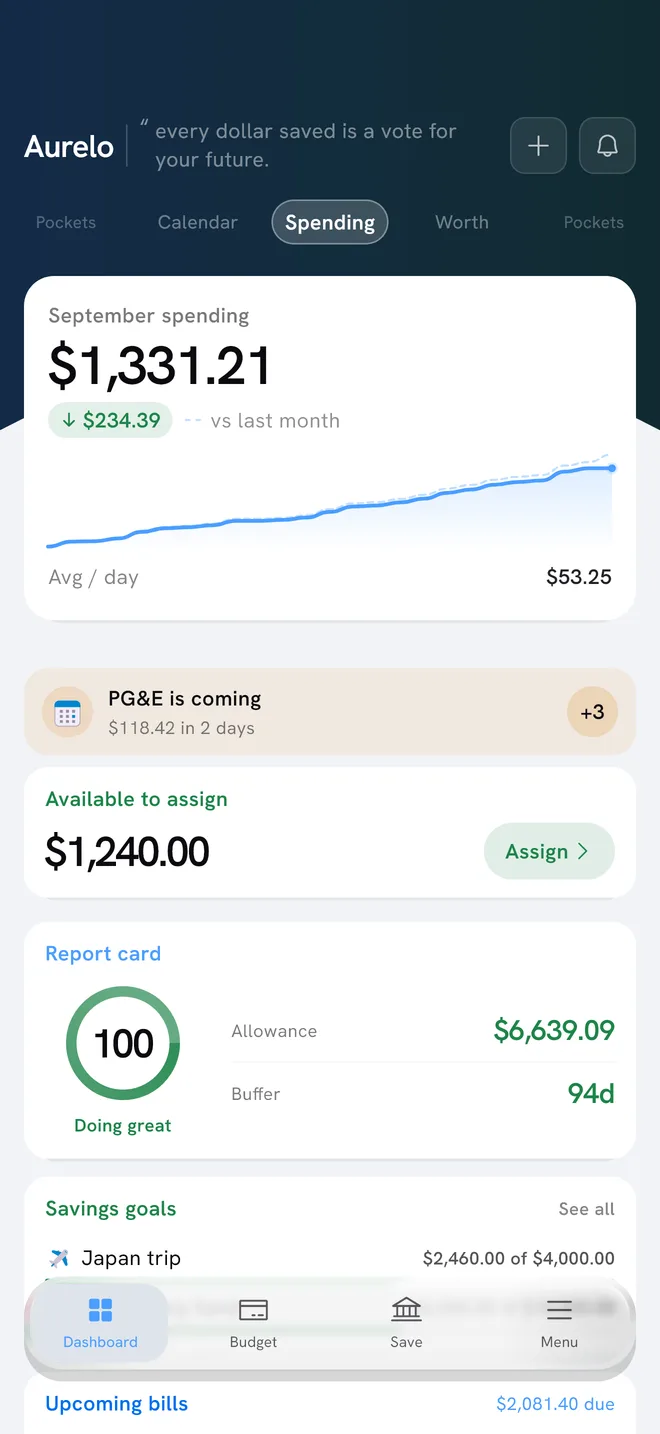
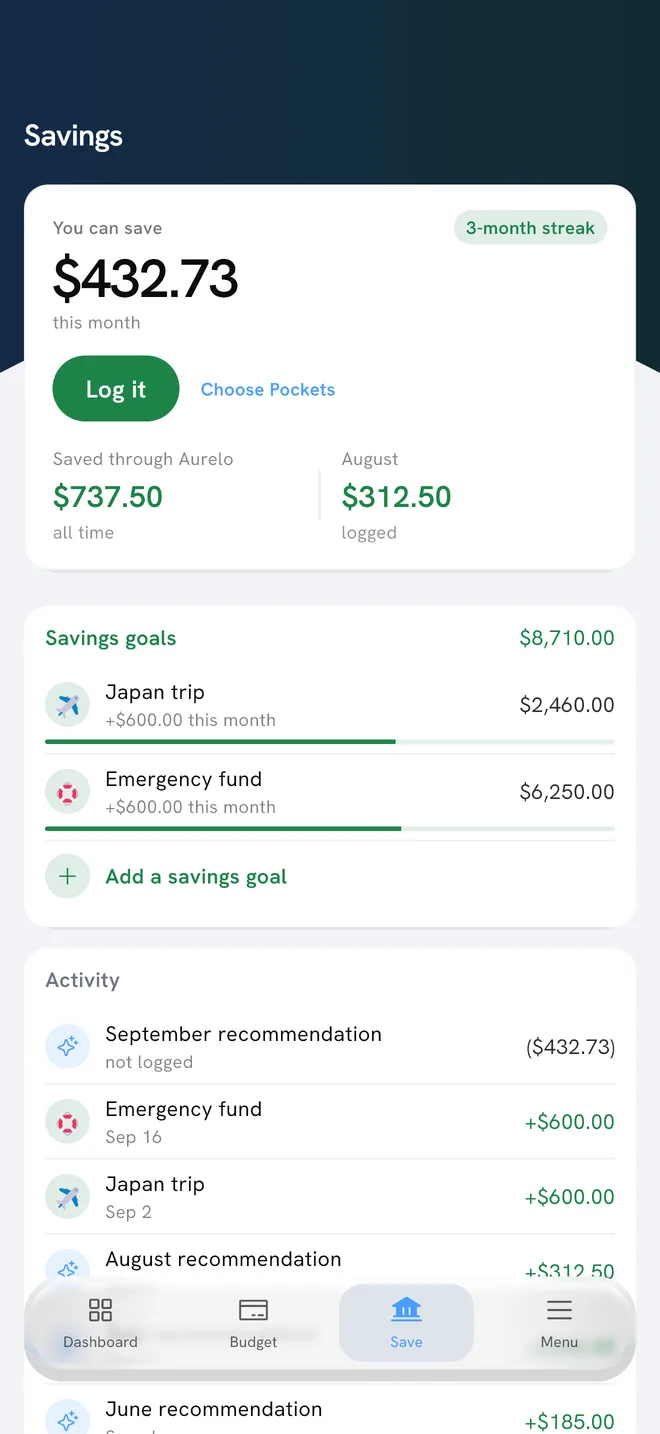
Aurelo builds sinking funds into the budget as Annual Pockets: pockets for yearly bills like insurance, a membership or a card’s annual fee, where you set aside a bit each month so the full amount is ready when it is due.
In Aurelo: Yearly bills show up in your upcoming bills about a month before they are due, so you see them coming well before they hit your account. Aurelo only shows a bill it is confident about; it does not guess.
An Annual Pocket works like any other pocket: it shows what you have set aside and what is left. Because it lives in the same budget as everything else, the money you have put in it is already spoken for, so next June’s registration is not mistaken for money you can spend this week.
In Aurelo: On the Free plan you can make 2 Annual Pockets by hand. Gold includes unlimited Annual Pockets, along with the rest of Gold’s features.
The short version
List every cost that does not happen monthly. Estimate each one, divide by the months until it is due, and set that amount aside every month as if it were a bill. Keep the money tracked by purpose and spend it only on what it was saved for. It is a small amount of setup, and in return, the months with big bills in them start to feel like every other month. If you are starting a budget from scratch, how to make a budget is the place to begin.
Common questions
What is a sinking fund?
It is money you set aside a little at a time for a cost you know is coming, such as car insurance or holiday gifts. When the bill arrives, the money is already there, so the month it lands in stays normal.
How do I budget for annual expenses?
List every cost that happens yearly or irregularly, estimate each one, and divide by the number of months until it is due. Set that amount aside every month, and spend it only on the bill it was saved for.
What is the difference between a sinking fund and an emergency fund?
A sinking fund is for costs you can predict, even if they are infrequent. An emergency fund is for things you cannot predict, like a job loss or a sudden medical bill. Keeping them separate stops planned costs from draining your safety net.
Where should I keep sinking fund money?
Many people keep it in a separate savings account so it is not spent by accident, and track how much belongs to each fund. Others leave it in checking and track it in their budget. Either works if you can always see what each fund holds.
Sources
- Economic Well-Being of U.S. Households in 2025: Savings and Investments , Federal Reserve Board, 2026
- Consumer Expenditures in 2024 , U.S. Bureau of Labor Statistics, 2025
Written by the Aurelo team. We build Aurelo, a budgeting app that reads your accounts read-only and never moves your money. Every claim about the app is checked against the app itself, and every figure links to its source. This is general education, not financial, tax or legal advice.